Complex challenges, meaningful solutions.
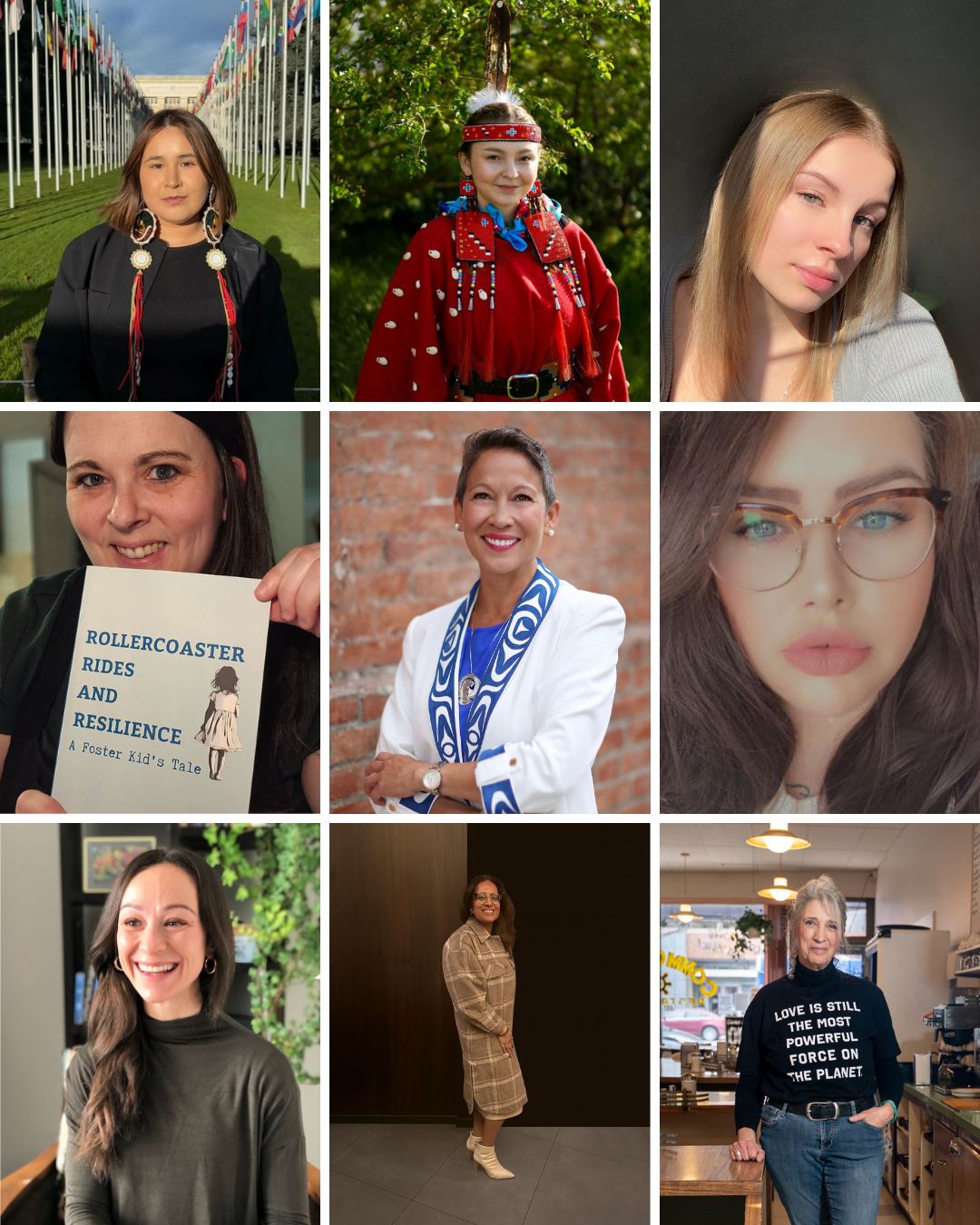
Our lived-experience leaders help you advance social progress.

Trauma-informed collaboration and systems thinking.
-
Our mission is to support and amplify the leadership of people with foster care experience, families, practitioners, and community leaders to transform systems and drive meaningful change.
-
We envision a world where people with foster care experience, families, and leaders come together to create cohesive communities and equitable systems.
Who We Work With:
Former youth in care interested in building community, cultivating leadership, expanding career pathways, and exercising meaningful influence in systems change.
Organizations, nonprofits, and governments committed to engaging people with lived experience through trauma-informed practices to create meaningful social impact.
Families and caregivers who want trauma-informed support, guidance, and connection to strengthen relationships and wellbeing.
Allies, researchers, educators, and service providers committed to building more equitable, responsive, and culturally grounded child welfare and social care systems.
What We Offer
We deliver services locally in Greater Vancouver and remotely to clients worldwide.
Travel outside the region is available and may incur additional expenses.
-
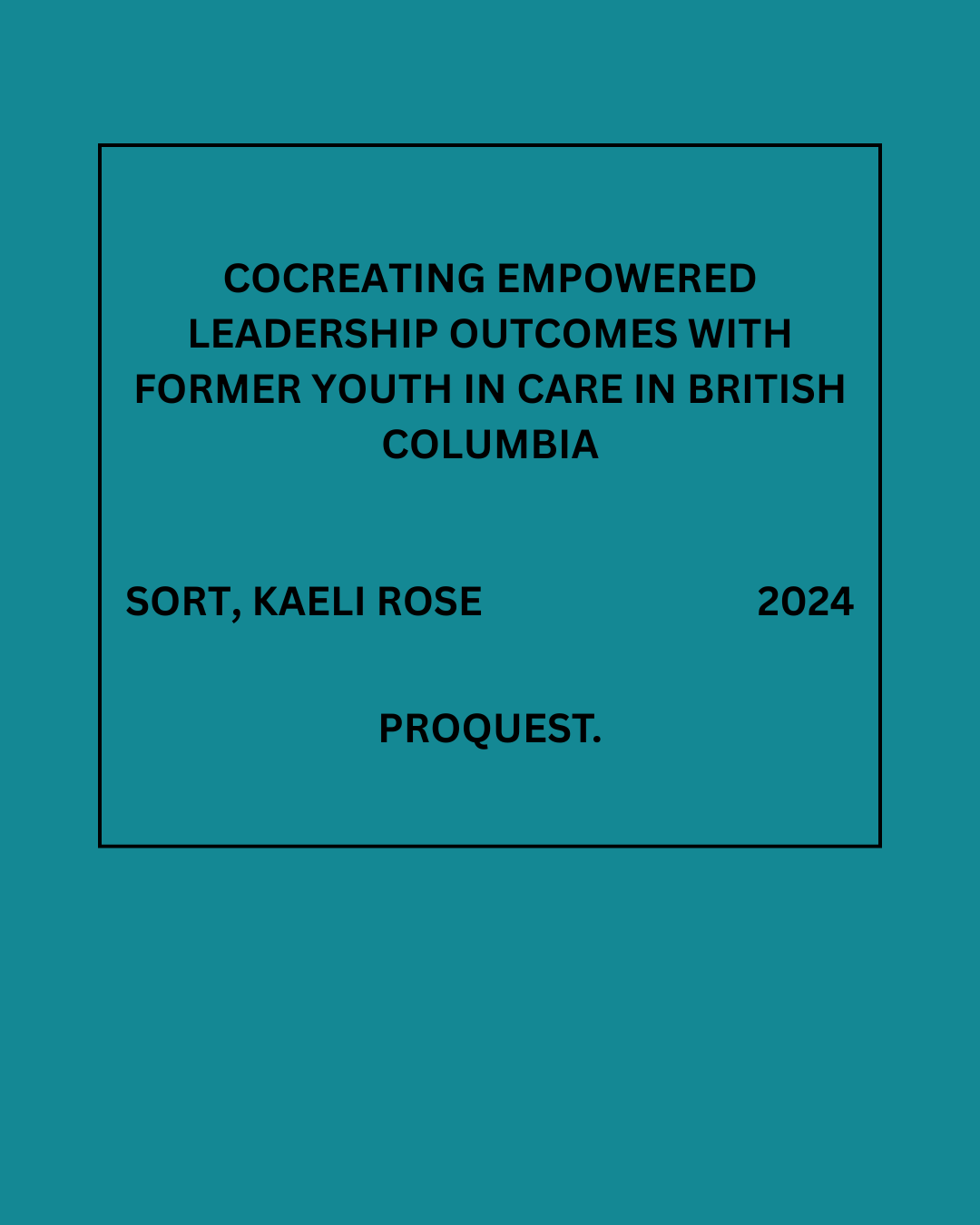
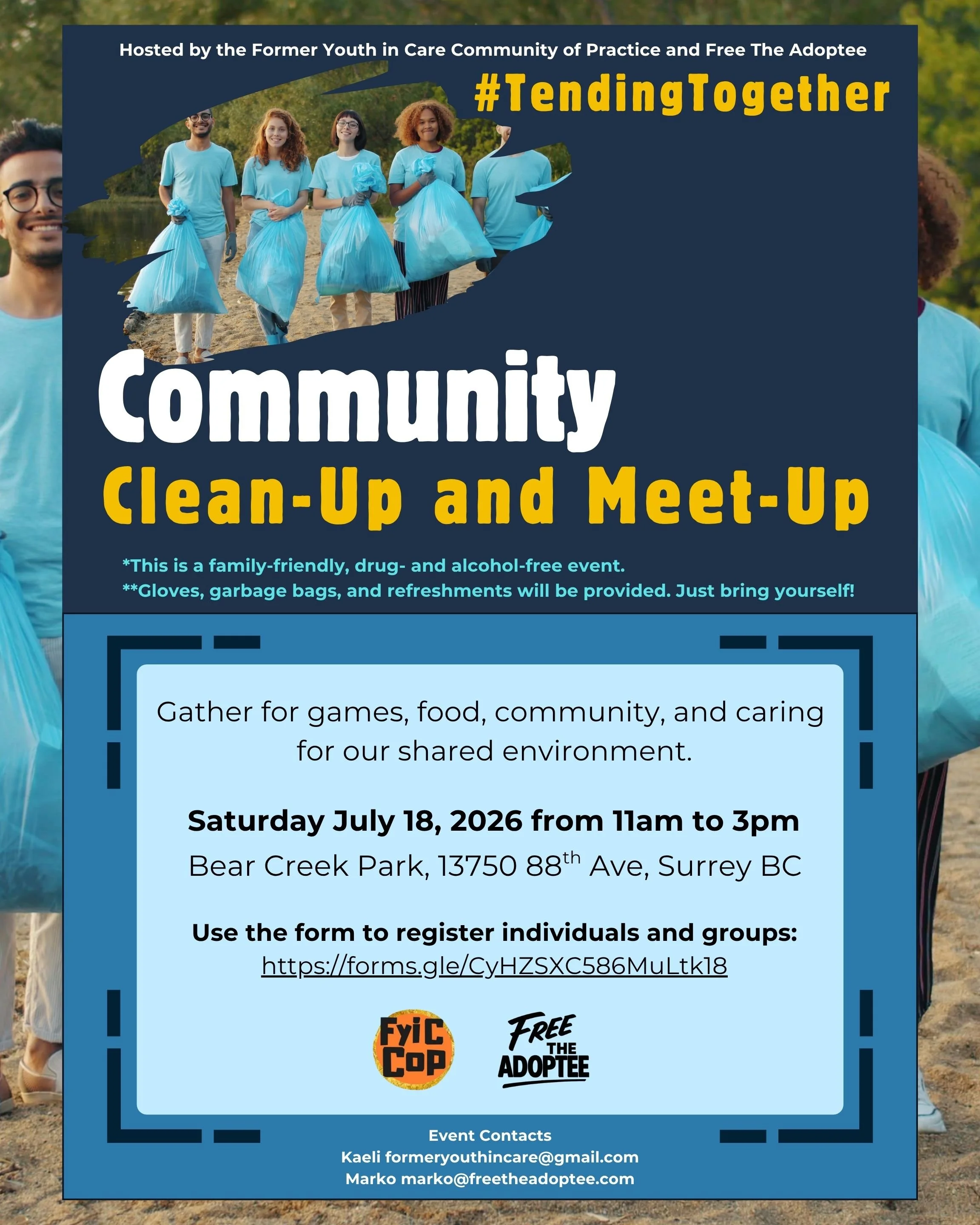
We support peer mentorship and community leadership initiatives creating spaces where former youth in care can guide, support, and inspire one another. These programs strengthen connection, foster resilience, and build leadership skills while promoting collective learning and empowerment across the community.
Some examples of our (past and present) peer leadership initiatives include:
Leadership Advisor Program
Working Group Leadership Program
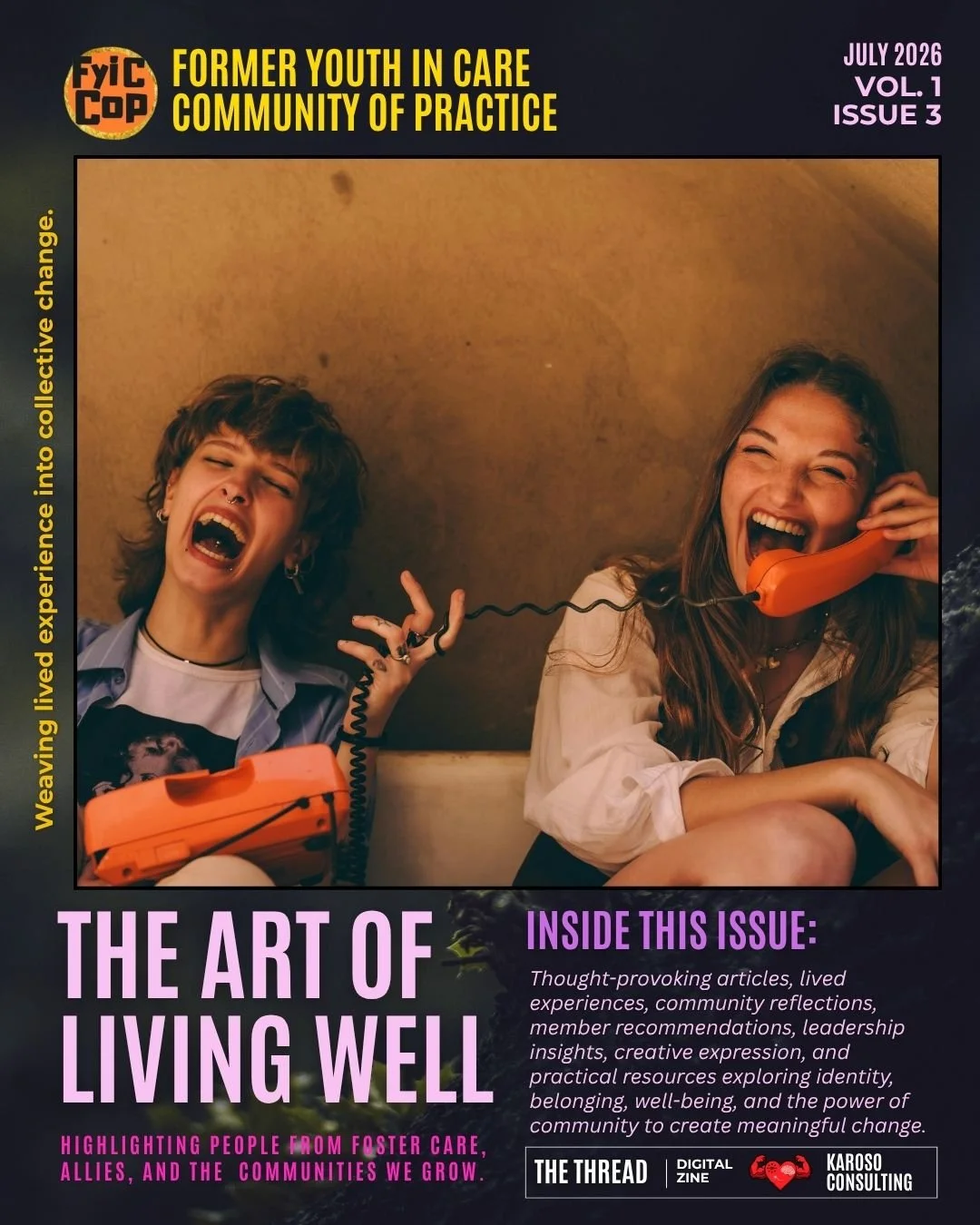
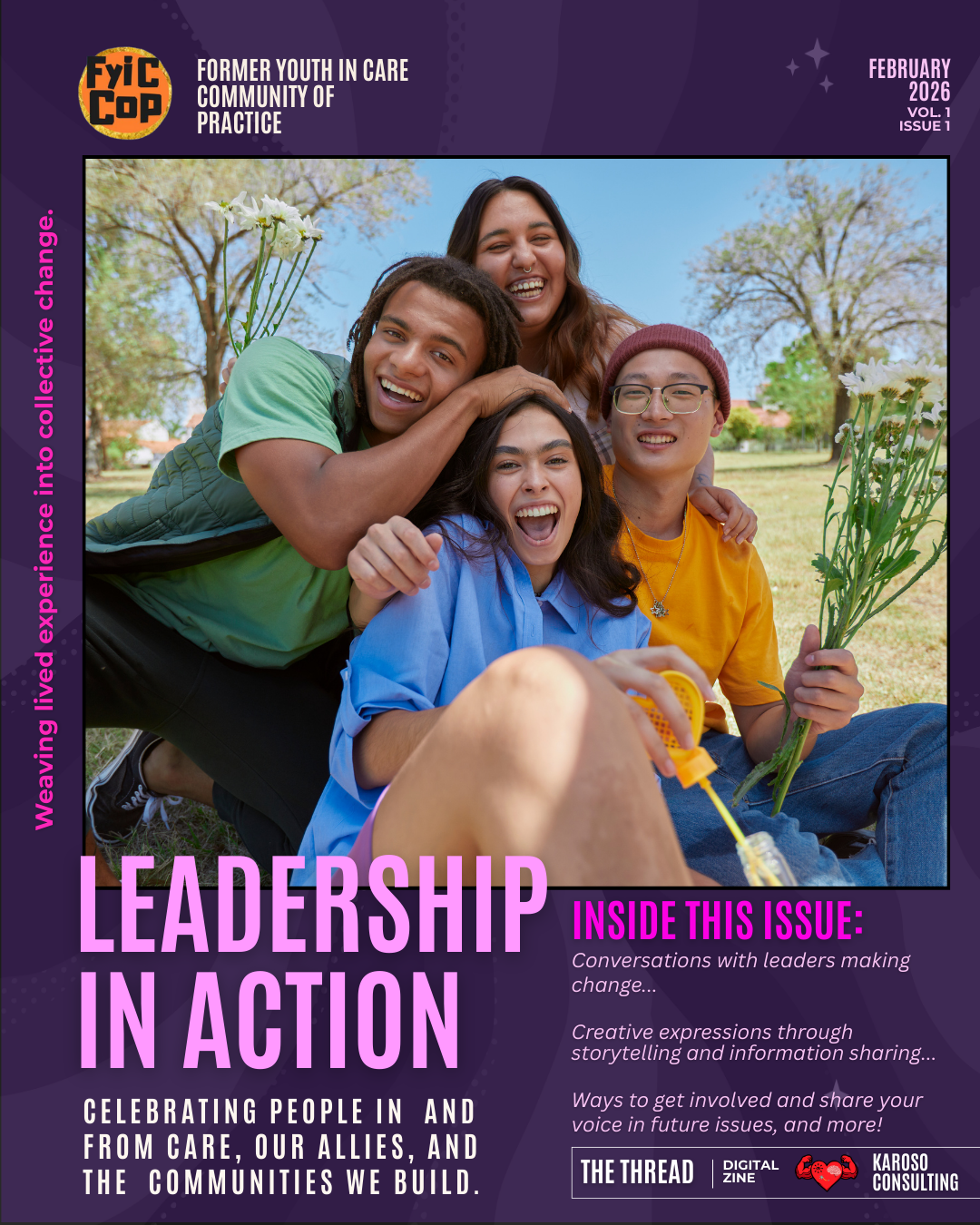
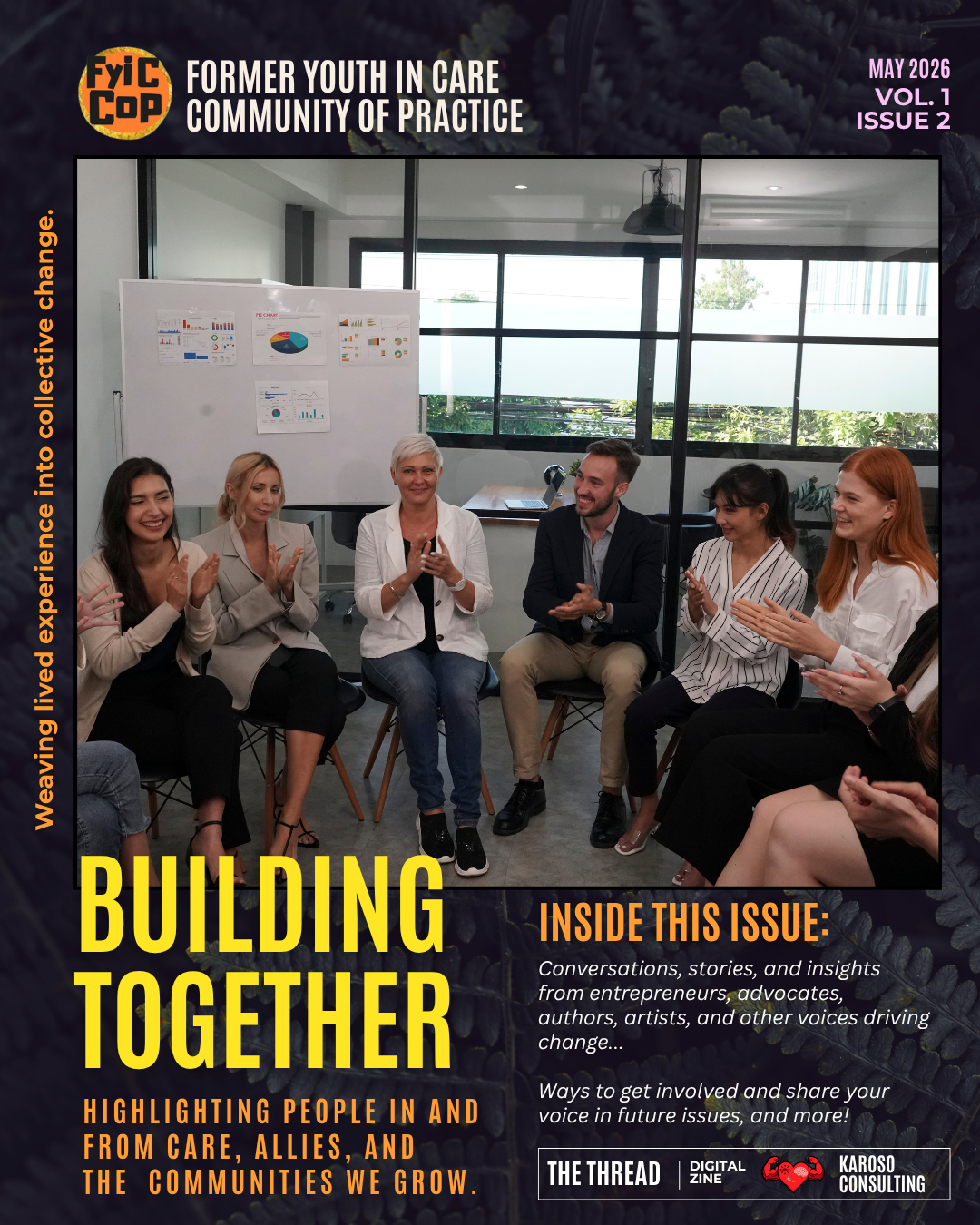
The Thread- a digital zine for people from care and our allies
And, more!
-
We offer engaging key note presentations and public speaking services tailored to make an impact at your conference, special event, school, community group, or organization that support people living on the margins.
Our talks draw on lived experience, research, and systems knowledge to inspire reflection, challenge assumptions, and provide practical guidance that brings people closer together.
-
We provide guidance and support to strengthen relationships and promote wellbeing for families and caregivers. Our approach is trauma-informed, collaborative, and practical, available to support all members of the family navigate challenges, build skills, and create safe, nurturing environments.
-
We work with organizations, non-profits, and governments to deliver trauma-informed practices that create meaningful and lasting impact. We design ethical, lived-experience-centered strategies that improve outcomes and advance equity. By turning complex challenges into coordinated, actionable solutions, we support meaningful transformation across programs, policies, and systems.
-
We create spaces for individuals, families, and organizations to learn, collaborate, and act together. Through workshops, training, and shared projects, we build capacity, deepen relationships, and foster collective impact.
How to Work With Us
Choose Your Path
Join the CoP, book a training, sponsor us, or start a partnership.
Meet With Us
We explore your needs, goals, and the change you're hoping to create.
Transform Together
We co-design solutions that uplift lived experience and strengthen systems.

Why Our Work Matters
While less than 0.3% of Canadians have been in foster care, their experiences disproportionately intersect with systemic challenges: over 65% of unhoused Canadians, 50% of sexually exploited youth, and over 65% of Indigenous inmates have been in foster care (Nichols et al., 2017).
People in and from care face elevated mental health risks and educational barriers, being three to four times more likely to attempt suicide than their peers (Evans et al., 2017), and with fewer than 44% graduating high school in Ontario compared to 81% of their peers (Kovarikova, 2017).
In BC, between 2013 and 2018, 54% of children and youth who died by suicide had received child welfare services within the past year (BC Coroners Service, 2019).
At the Former Youth in Care Community of Practice, we work with people with lived experience, families, communities, and government and non-government organizations to close gaps and strengthen systems of care.
-
BIPOC, Métis, Inuit, and other Indigenous children are vastly overrepresented in the foster care system. In 2021, they made up 7.7% of all children under age 15 in Canada, yet accounted for 53.8% of children in foster care (Statistics Canada, 2022).
This stark disparity underscores the need for culturally informed, trauma-sensitive, and community-driven supports that prioritize equity and empowerment.
-
In BC, approximately 850 youth age out of the child welfare system upon turning 19 every year, often called "aging out” (The Tyee, December 2020).
-
People with lived experience in the child welfare system face disproportionately negative outcomes. They are 200 times more likely to experience homelessness, 60 times more likely to be sex trafficked, and five times more likely to die before the age of 30 (Frazier et al., 2019).
Youth in care are also 31% less likely to enroll in postsecondary education than their peers (Ministry of Education, 2018). Medlin and Jaeger (2021) describe former youth in care (FYiC) as “an invisible population on most college campuses” (p. 154). Research shows that factors such as coaching, supportive adults, and consistent relationships contribute significantly to FYiC success in postsecondary settings. Yet, as Elliott and Fitzgerald (2022) note, “at a time when most young adults are considering career pathways . . . many foster youths are prematurely trying to access basic needs of food, shelter, and income” (p. 57).
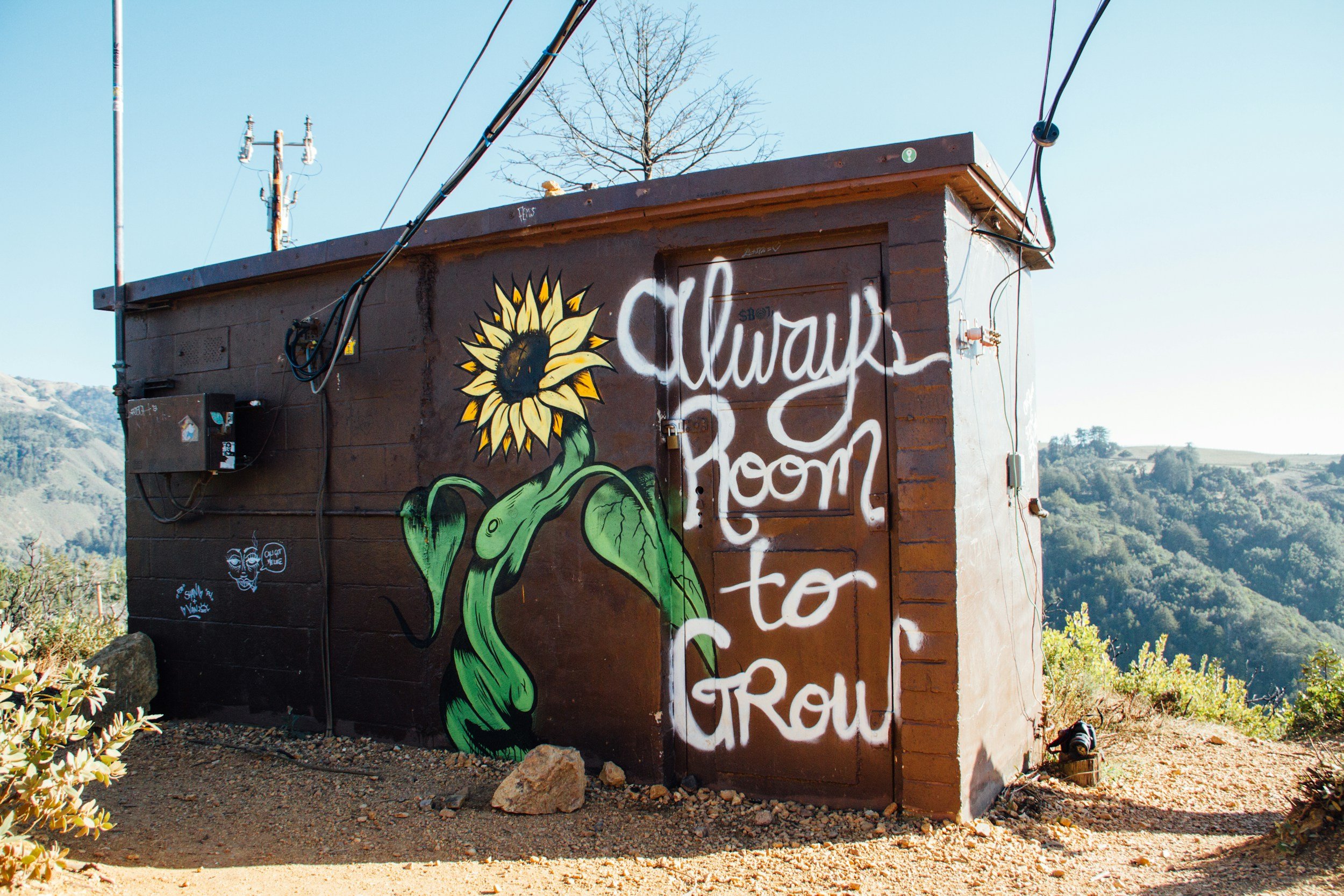
Learn about the story that fuels our impact.
Contact
Community Empowerment Operator, Kaeli Rose Sort
Connect with Kaeli for leadership inquiries, partnerships, and/ or opportunities to contribute to community-driven work.
Email: formeryouthincare@gmail.com
Donations, Advertising & Other Inquiries
For contributions to our stewardship model, advertising opportunities, partnerships, submissions, or general inquiries, we welcome you to connect with us.
Email: formeryouthincare@gmail.com
Let’s Collaborate.
Collaborate with us to develop skills, expand your network, and contribute to systemic change and meaningful community impact. Contact us to gain access to trauma-informed leadership guidance, resources, and opportunities for personal and professional growth.